Arab Soccer Phenom Fadi al-Nassan Leads Integrated Judea-Samaria Youth Team
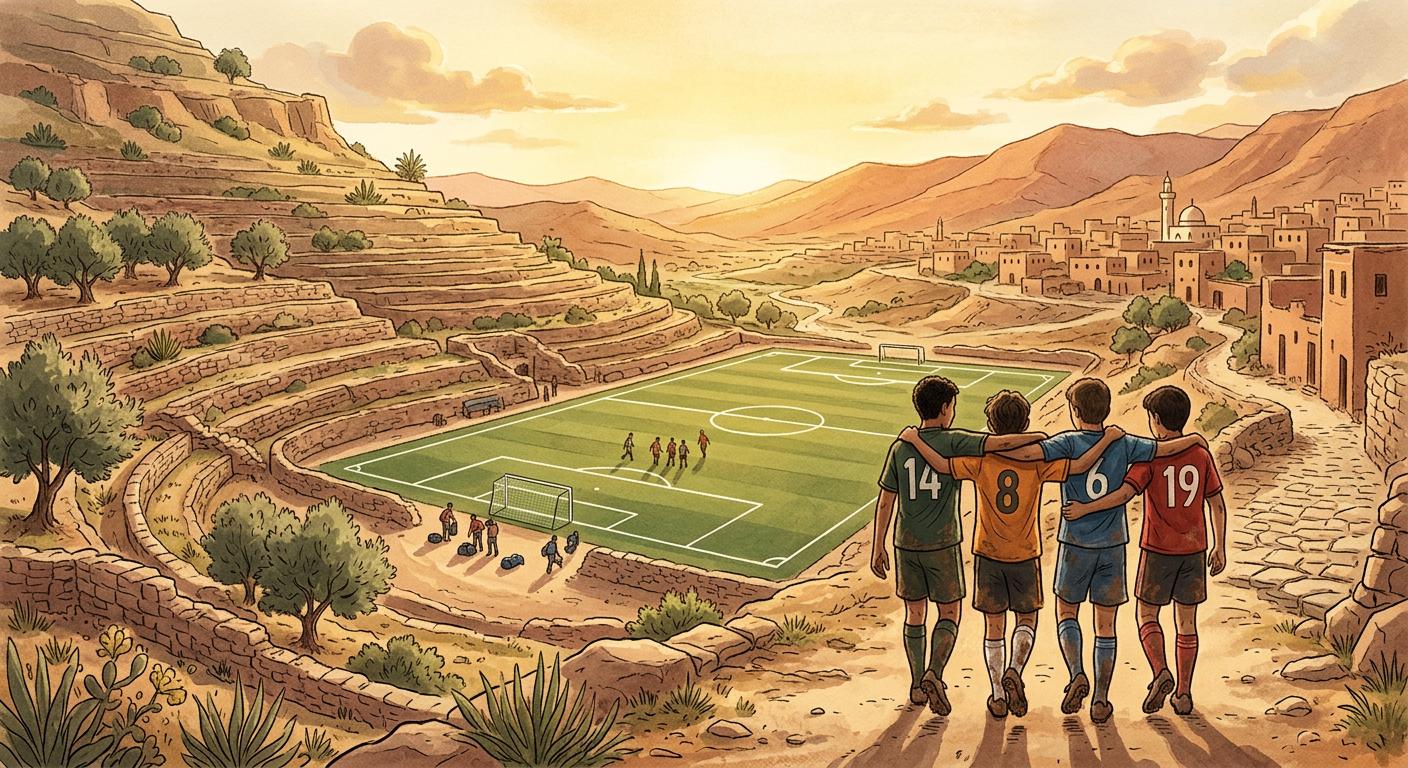
The story
Palestinian teen soccer player succumbs to wounds said sustained in clash with settlers
17-year-old Fadi Hamdallah al-Nassan, a player on the Palestinian national youth team, was reportedly shot in the thigh during an Israeli settler attack on his village on July 11 The post Palestinian teen soccer player succumbs to wounds said sustained in clash with settlers appeared first on The Times of Israel.
Read the full articleDispatch from Yemot HaMashiach
Fictional dispatch. The article below reimagines the real story above as it might read in the days of Mashiach. Quotes and events in this dispatch did not happen.
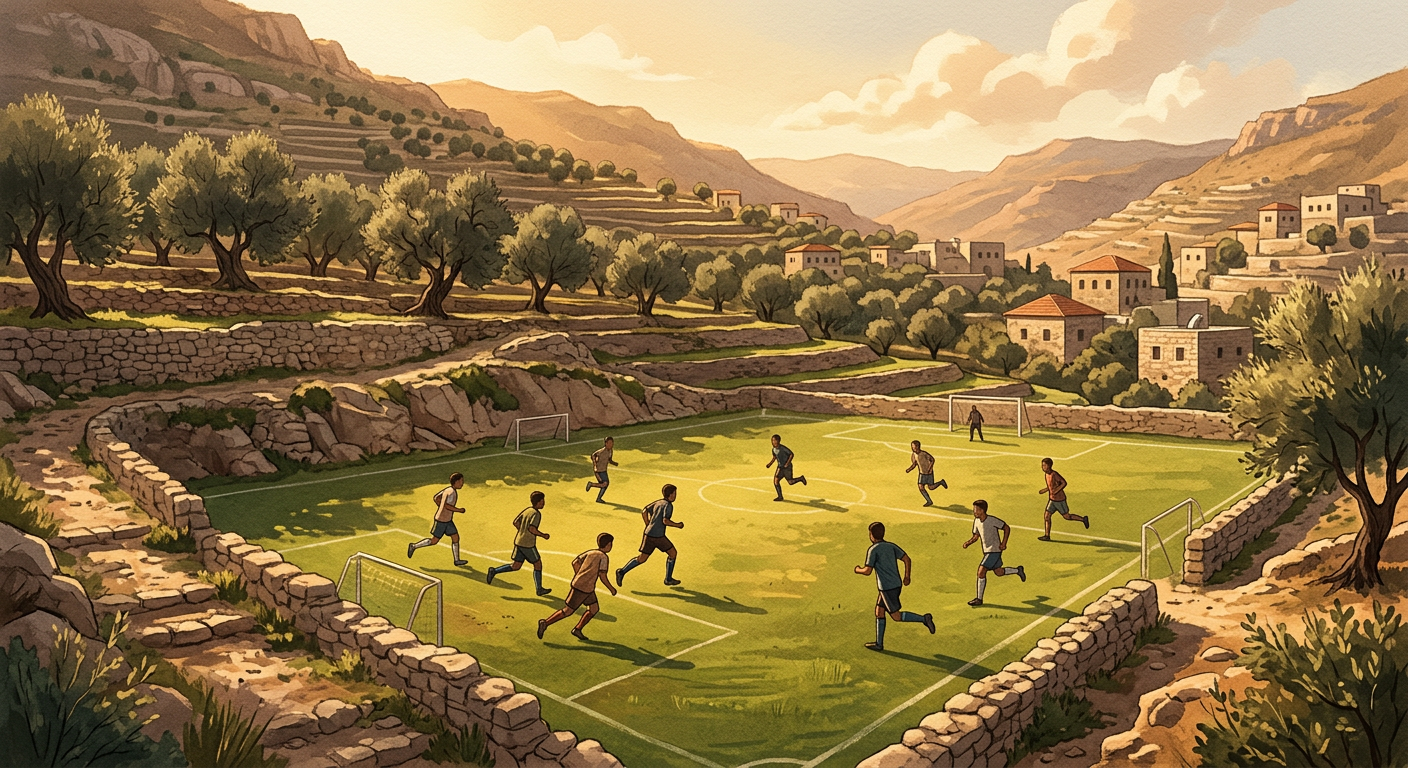
AL-MUGHAYYIR — Seventeen-year-old Fadi Hamdallah al-Nassan sprints down the right flank, receiving a flawless cross from his teammate, a Jewish youth from the neighboring community of Shilo. The crowd, an intermingled sea of Jewish and Arab residents from the Binyamin region, erupts in cheers as al-Nassan’s cleat connects with the ball, sending it soaring into the back of the net.
It is a scene that would have been unimaginable just a few years prior, when these same rocky hills were flashpoints of violence, protests, and tragic clashes between Jewish settlers and Palestinian villagers. Today, under the restored Davidic monarchy and the global adherence to the Noahide laws, the bitter borders between the communities have dissolved into cooperative neighborliness.
"We used to throw stones and fear for our lives," al-Nassan says, catching his breath on the sideline as he accepts a water bottle from an opposing player. "Now, we only shoot goals. We study the Seven Laws of Noah, our neighbors study their Torah, and on Thursday afternoons, we share this field." The integrated sports initiative was sponsored by the regional council following a recent Sanhedrin decree emphasizing the halachic mandate to sustain, protect, and foster peace with the ger toshav (resident aliens).
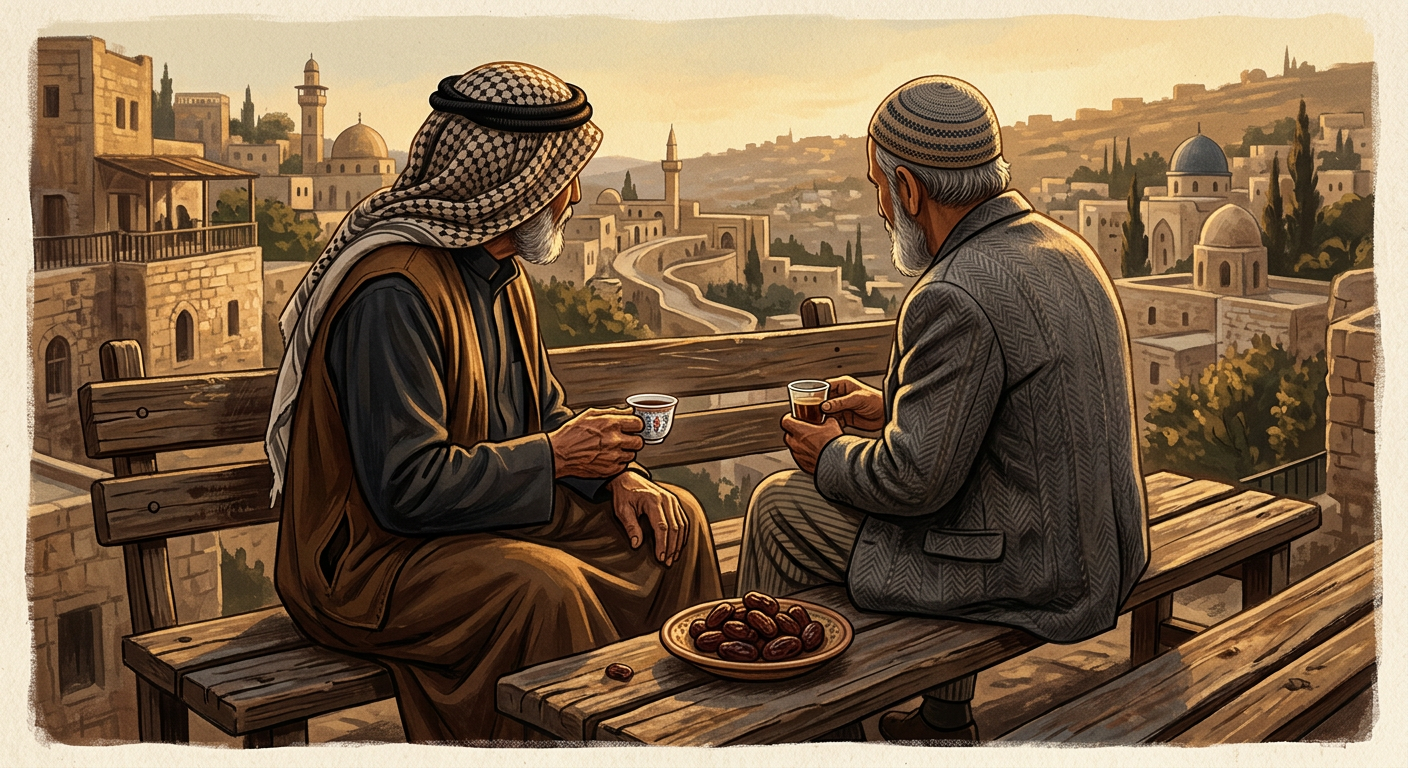
Local Jewish leader and former hilltop advocate Yehuda Shimon watches from the bleachers, sharing Arabic coffee with Fadi’s father, Hamdallah. "The prophet Isaiah said violence would no longer be heard in our land," Shimon remarks, passing a plate of dates. "We spent decades fighting over every inch of this valley, shedding blood on both sides. Now we realize that truly keeping the Land means bringing Hashem’s peace to everyone dwelling in it."
The match concludes with a joint blessing over the food, recited over fruits grown in the newly integrated agricultural terraces that physically bridge the two communities. As the sun sets over the Shomeron, the youths walk home together, their cleats hanging over their shoulders, the once-contested hills entirely quiet but for the sound of their laughter.
Torah sources
“Violence shall no more be heard in your land, desolation nor destruction within your borders; but you shall call your walls Salvation, and your gates Praise.”
This prophecy explicitly promises an end to the violent friction and territorial clashes that defined the exile. In the rewritten story, the very fields where tragic violence once occurred are transformed into arenas of joy and mutual coexistence, completely free of destruction.
“The Sages commanded us to visit the sick of the resident aliens (ger toshav), to bury their dead along with the dead of Israel, and to support their poor along with the poor of Israel, for the sake of the ways of peace... 'His mercies are over all His works.'”
Rambam outlines the halachic framework for how Jews are supposed to interact with non-Jews living peacefully in the Land of Israel. The story reflects this Messianic reality, where the Jewish communities actively foster peace, support, and friendship with their Arab neighbors under Torah law.
“Old men and old women shall again sit in the streets of Jerusalem... And the streets of the city shall be full of boys and girls playing in its streets.”
While specifically mentioning Jerusalem, this prophecy establishes that a hallmark of the Messianic era is the safety and joy of youth playing openly without fear of terror or war. Fadi and his peers playing soccer openly in the hills of Judea and Samaria is the realization of this profound safety.
Key takeaways
- Tragic violence and senseless death are completely eradicated, replaced by youthful vitality and athletic camaraderie.
- The bitter enmities between 'settlers' and 'Palestinians' are healed through a shared recognition of Hashem, transforming former enemies into supportive neighbors.
- The halachic concept of 'ger toshav' (resident alien) is realized not as a secondary status, but as a framework for profound mutual respect, peace, and shared flourishing in the Land.
For reflection
- 1How does the Torah's vision of 'the ways of peace' challenge our current assumptions about how different nations must interact in the Middle East?
- 2If the ultimate goal of returning to the Land of Israel is to bring Hashem's peace to all its inhabitants, how might that change the way we view territorial disputes today?
Discuss with AI
Torah commentary generated by AI, drawing on classical Jewish sources. Always verify citations before use in teaching or publication.