Uniting Jerusalem: Former protesters and patrons pack Cafe Basimta for third consecutive Shabbat
The story
‘Stop destroying Jerusalem’: Haredim target cafe open on Shabbat for 3rd week in a row
Police erect barriers to prevent friction outside city center's Cafe Basimta, a recently opened business that has drawn the ire of ultra-Orthodox demonstrators The post ‘Stop destroying Jerusalem’: Haredim target cafe open on Shabbat for 3rd week in a row appeared first on The Times of Israel.
Read the full articleDispatch from Yemot HaMashiach
Fictional dispatch. The article below reimagines the real story above as it might read in the days of Mashiach. Quotes and events in this dispatch did not happen.
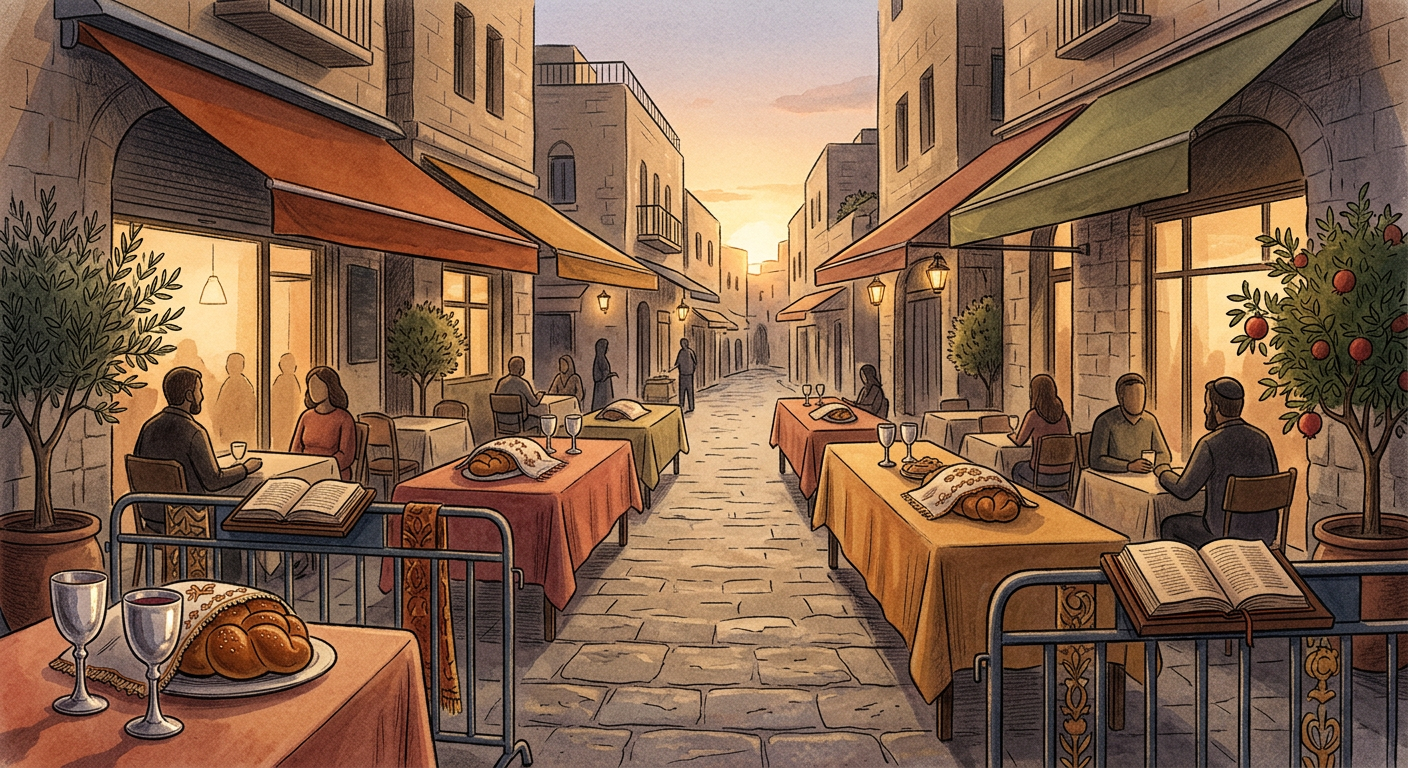
JERUSALEM — For the third week in a row, crowds of Haredi residents have targeted Cafe Basimta in the city center. But instead of the angry protests and police barricades of the past, the massive gatherings are entirely celebratory. The cafe's owners, who once defied religious demonstrators by operating espresso machines and registers on Saturday mornings, now host one of Jerusalem's largest public Shabbat gatherings, drawing thousands of Jews from across the religious spectrum to sing and share divrei Torah.
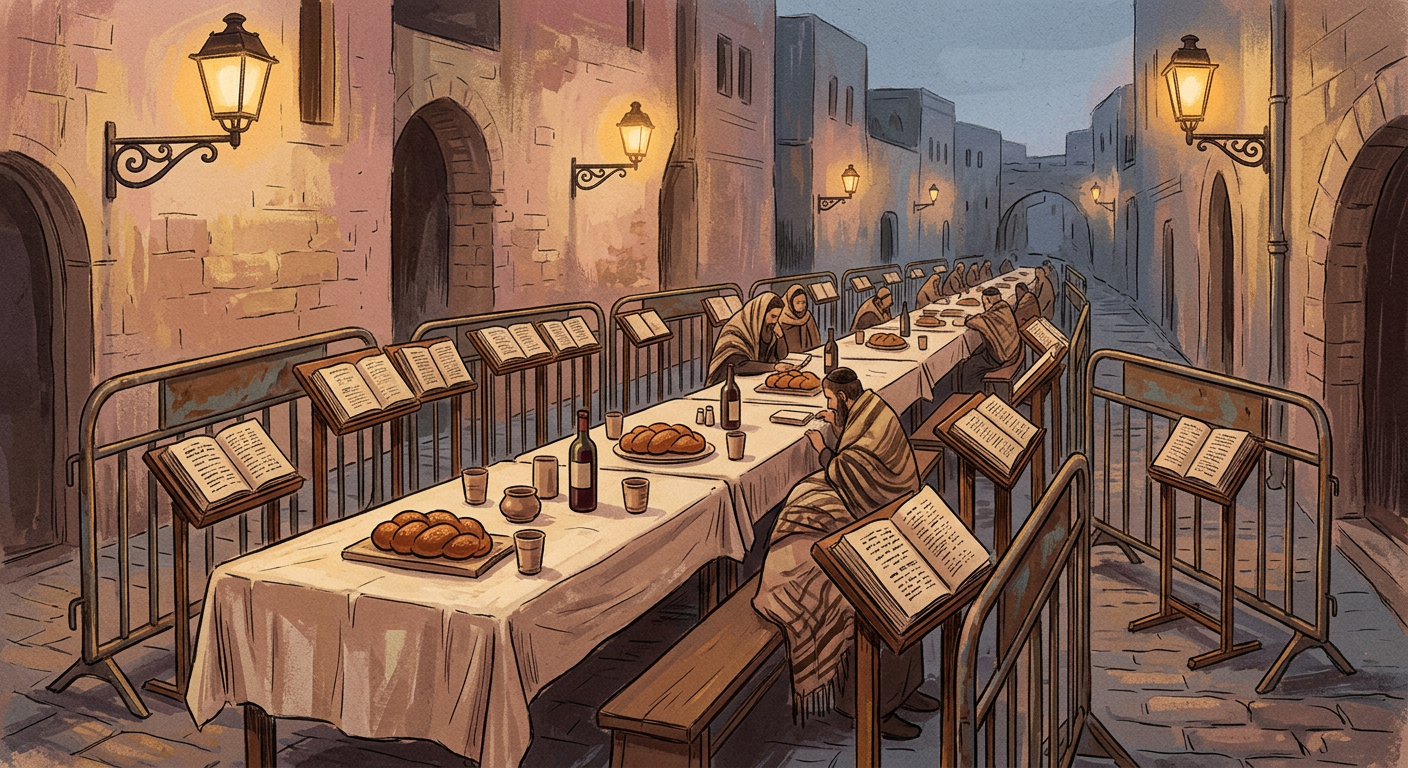
As the Friday afternoon sirens echo through the stone streets, signaling the onset of the day of rest, the commercial ovens at Cafe Basimta are turned off and the espresso machines are covered. In their place, long tables stretch out onto the pavement, laden with challah, wine, and slow-cooked stews. The same police officers who once deployed metal barricades to separate screaming factions now use those barriers to display Siddurim and Chumashim for the overflowing crowds.
"We used to think they were destroying Jerusalem," says Rabbi Shmuel, a neighborhood Haredi resident who previously led the shouts of 'Shabbos!' outside the cafe. "Now we see they are the ones rebuilding it. The light of Shabbat that shines from this cafe is something we never managed to create with our protests." He sits side-by-side with the cafe's founder, pouring him a cup of Kiddush wine as their families share a meal.

For the proprietors of Cafe Basimta, the shift was natural once the reality of the Messianic era took hold. "Nobody forced us to close on Shabbat," explains co-owner Yael. "Once the knowledge of Hashem became as clear as the sun over the Old City, pulling espresso shots just felt completely absurd. We realized our true business wasn't selling coffee, but gathering Jews together. Now, Shabbat is our busiest and most joyful day, and we don't exchange a single shekel."
The Sanhedrin, recently reconvened in the rebuilt Chamber of Hewn Stone, has praised the "Basimta Model" as an exemplar of societal healing. Across Israel, former cultural battlegrounds—from Tel Aviv's Dizengoff Square to Haifa's Carmel Center—are experiencing similar transformations. The battle for the soul of the public square has ended not with a victor and a vanquished, but with a unified nation delighting in the Sabbath.
Torah sources
“If you turn away your foot because of the Sabbath, from pursuing your business on My holy day; and call the Sabbath a delight... Then you shall delight yourself in the Lord.”
In the original story, Shabbat was viewed as a battleground over business operations and secular freedom. The Messianic transformation realizes Isaiah's vision: the cafe owners voluntarily cease business not out of coercion, but because they have discovered the profound, transcendent 'delight' of the day.
“I will give them one heart, and I will put a new spirit within them; and I will take the stony heart out of their flesh, and give them a heart of flesh.”
The bitter secular-religious divide in Israel, characterized by protests, yelling, and police barricades, is a symptom of the 'stony heart' of exile. This prophecy promises a fundamental shift in Jewish unity—the 'one heart' that allows former adversaries to sit at the same table and celebrate together.
“Do not presume that in the Messianic age any facet of the world's nature will change or there will be innovations in the work of creation. Rather, the world will continue according to its nature.”
Rambam emphasizes that Mashiach does not bring cartoon miracles; the physical world remains. The cafe still exists, the city center is unchanged, and the people are the same individuals. What changes is human consciousness and behavior—the natural world is perfected through a unified recognition of God.
Key takeaways
- The bitter secular-religious divide over public space is healed through mutual love and shared spiritual clarity, rather than political coercion or legislation.
- Shabbat observance transforms from a perceived burden or restriction into a universally recognized 'delight' (Oneg Shabbat) that enhances community.
- Police barriers and infrastructure designed for crowd control and managing friction are repurposed for Torah study, symbolizing the end of internal Jewish conflict.
- Commercial spaces like cafes aren't destroyed or shut down; their ultimate purpose is elevated to serve the spiritual and communal needs of the Messianic era.
For reflection
- 1How does the voluntary, joyous embrace of Shabbat in this story contrast with historical debates about religious legislation and the 'status quo' in Israel?
- 2If the 'knowledge of God' filled the earth today, how would your own workplace, business, or local hangout transform its operations on Shabbat and throughout the week?
- 3What does it mean for the Haredi protesters to realize that the 'light of Shabbat' could be built by the very people they used to protest against?
Discuss with AI
Torah commentary generated by AI, drawing on classical Jewish sources. Always verify citations before use in teaching or publication.