Gafni Steps Down as Degel HaTorah Dissolves; Former Politicians Join Sanhedrin Administration

The story
Veteran Haredi MK Moshe Gafni to be removed as leader of UTJ’s Degel HaTorah faction
Gafni and MK Uri Maklev won't run in October 27 election, with rabbinical leader saying it is time to 'refresh' party list; Shakeup said driven by internal dispute over military draft The post Veteran Haredi MK Moshe Gafni to be removed as leader of UTJ’s Degel HaTorah faction appeared first on The Times of Israel.
Read the full articleDispatch from Yemot HaMashiach
Fictional dispatch. The article below reimagines the real story above as it might read in the days of Mashiach. Quotes and events in this dispatch did not happen.

JERUSALEM — Veteran public servants Moshe Gafni and Uri Maklev announced Tuesday the formal dissolution of the Degel HaTorah political faction, ending the party's decades-long run in Israeli politics. Standing outside the newly expanded Lishkat HaGazit (Chamber of Hewn Stone) on the Temple Mount, the two leaders explained that with the restoration of the Great Sanhedrin and the Davidic monarchy, partisan political factions are no longer necessary.
The announcement officially closes the book on what was once the most fractious issue in Israeli society: the military draft. For decades, Degel HaTorah battled secular factions over the conscription of yeshiva students into the Israel Defense Forces. Now, following the global disarmament treaties overseen by King Mashiach, the IDF has transitioned its remaining personnel into the National Infrastructure and Temple Logistics Corps, rendering the draft debate entirely obsolete.
Leading rabbis who previously guided the party’s Knesset votes endorsed the move, citing a need to 'refresh' the nation's leadership structure to align with halachic governance. 'For years, we fought to raise the banner of Torah in a secular parliament,' said one senior rabbi from Bnei Brak. 'Today, the entire world streams to Zion to learn God's law. The banner of Torah is no longer a partisan flag; it is the fabric of our society.'
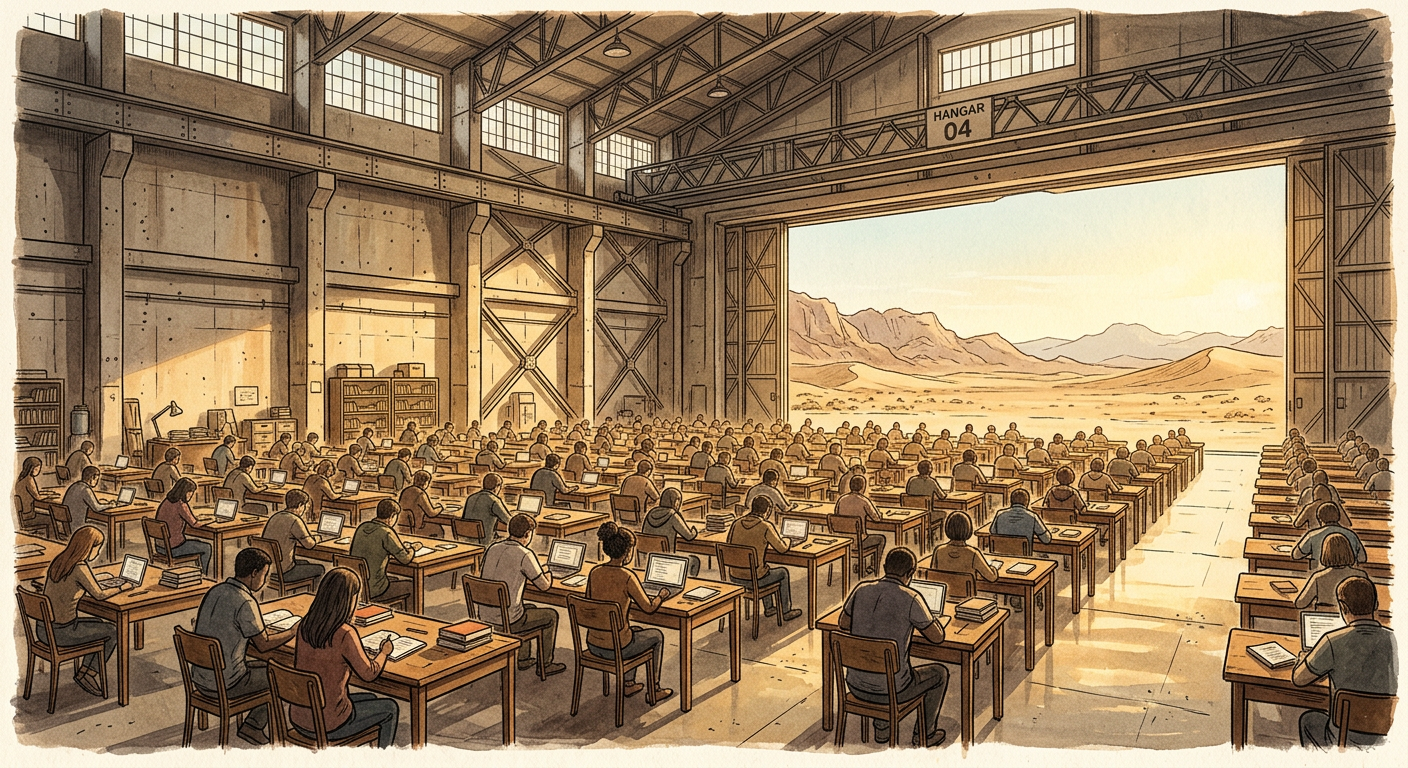
Rather than retiring, Gafni and Maklev will utilize their decades of administrative experience to manage the logistical challenges of the Messianic era. Maklev has been appointed to the Sanhedrin's Ministry of Ingathering, organizing housing for the millions of returning exiles. Gafni, meanwhile, will oversee the conversion of former armored corps bases in the Negev into sprawling, state-of-the-art Torah study centers.
'We used to measure our success by how many mandates we won or how much budget we secured for our institutions,' Gafni told reporters, looking out over a peaceful Jerusalem. 'But the ultimate mandate has been returned to its rightful Place. The budget of heaven is infinite, and our only constituency now is the truth.'
Torah sources
“They shall beat their swords into plowshares, and their spears into pruning hooks; nation shall not lift up sword against nation, neither shall they learn war anymore.”
The original news story hinged on a bitter societal dispute over the IDF military draft. In the Messianic era, the cessation of global conflict eliminates the need for a standing army, instantly dissolving the political friction over conscription and freeing all citizens to pursue wisdom.
“I will restore your judges as in days of old, your counselors as at the beginning. Afterward you shall be called the City of Righteousness, the Faithful City.”
Degel HaTorah and the Knesset were modern democratic workarounds for a fractured nation. The Torah envisions a pure halachic meritocracy governed by the Sanhedrin. The dissolution of political parties reflects the fulfillment of this prophecy, where governance returns to the sages seated in the Temple.
“The Sages and the prophets did not yearn for the Messianic era in order to have dominion over the entire world... but rather in order to be free to involve themselves in Torah and wisdom, without anyone to oppress or disturb them.”
Gafni and Maklev's shift from securing political power in the Knesset to facilitating Torah study perfectly mirrors Rambam's description. Political dominion and partisan leverage are no longer the goal; unhindered pursuit of wisdom is the new reality.
Key takeaways
- The bitter societal divide over drafting Haredi youth into the military is completely erased by the realization of global peace and the obsolescence of war.
- Partisan politics, characterized by factions fighting for budgets and influence, is replaced by unified halachic governance under the restored Sanhedrin.
- Veteran political leaders transition from fighting secular legislative battles to serving administrative and logistical roles for the ingathering of the exiles and the expansion of Torah study.
For reflection
- 1If the military draft and national defense are no longer necessary, how might the immense budget and energy previously dedicated to the IDF be repurposed in your own community?
- 2How does the shift from a partisan democracy to a Sanhedrin-led halachic system change the way Jewish communities resolve internal disagreements?
Discuss with AI
Torah commentary generated by AI, drawing on classical Jewish sources. Always verify citations before use in teaching or publication.