Bank of Israel, leaders unite to peg global digital currency to Temple ledger

The story
Bank of Israel, opposition heads pan Netanyahu’s proposal to use crypto to evade sanctions
Central bank says digital currency can't be used for such purposes, stresses need to preserve economic ties; Eisenkot tears into PM for 'dismantling Israeli economy'
Read the full articleDispatch from Yemot HaMashiach
Fictional dispatch. The article below reimagines the real story above as it might read in the days of Mashiach. Quotes and events in this dispatch did not happen.
JERUSALEM — The Bank of Israel, in unprecedented coordination with Benjamin Netanyahu and Gadi Eisenkot, announced today the complete integration of global digital currencies into the Beit HaMikdash's Half-Shekel ledger. The move establishes a unified, transparent blockchain to manage the overwhelming influx of voluntary tribute pouring into Jerusalem from foreign nations.

The financial initiative marks a stunning reversal from the pre-Messianic era, when Israeli leaders debated using cryptocurrency to evade international sanctions and economic isolation. Today, the central bank stressed that the new digital framework is essential not to hide Israeli assets, but to process the massive economic ties that have blossomed as foreign governments eagerly align their sovereign wealth with Torah economic laws.
“We are no longer dismantling the economy to survive global siege, but expanding it to sustain global peace,” said Eisenkot, who now sits alongside Netanyahu on the Sanhedrin’s National Economic Council. Eisenkot praised the cooperative initiative to convert former defense budgets and crypto reserves entirely toward funding agricultural yields for the upcoming Shmita year and facilitating interest-free global trade.
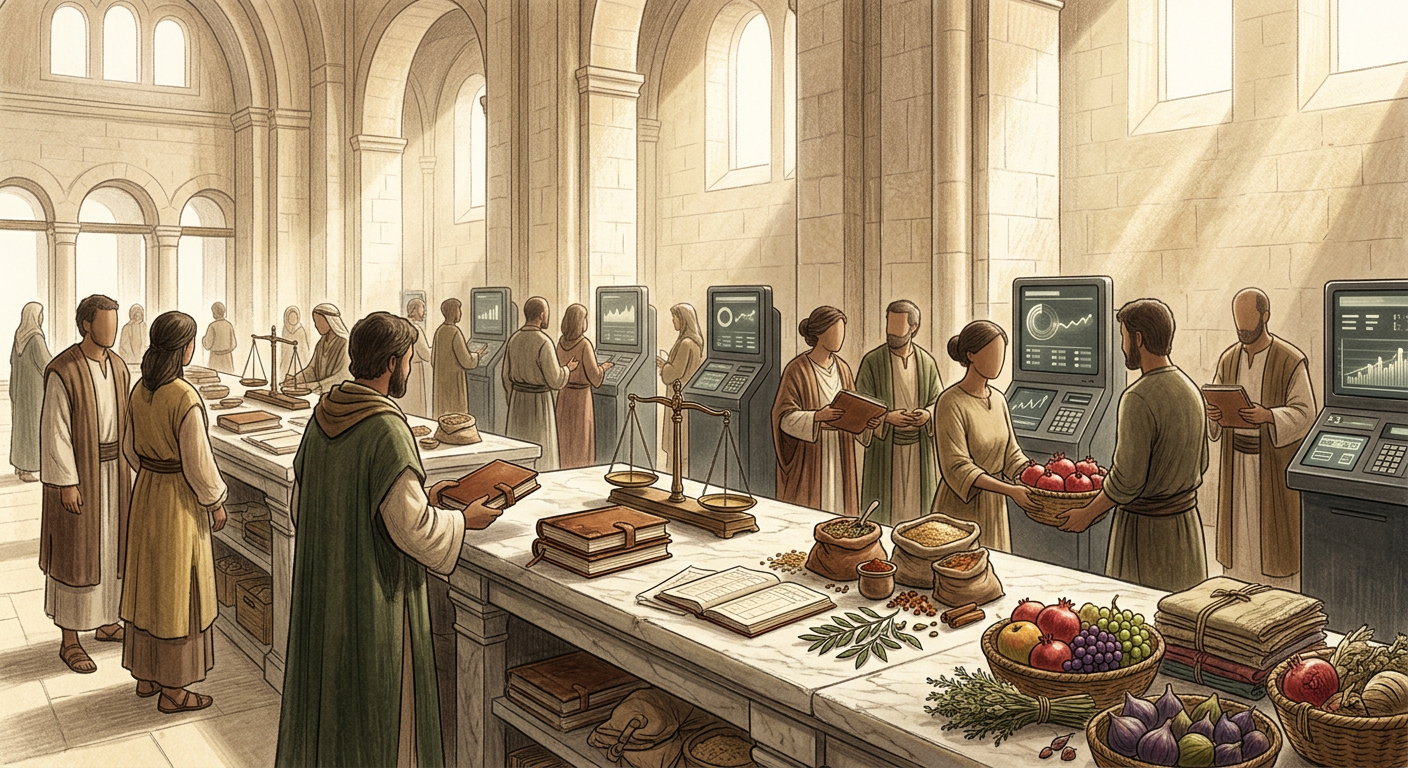
Netanyahu presented the technical framework to the Sanhedrin this morning, demonstrating how the new digital "Shekel HaKodesh" prevents any possibility of ribis (usury) in international transactions. Because the ledger is fully transparent, the Bank of Israel noted it perfectly fulfills the halachic requirements for tracking terumah and maaser (tithes) on a global scale.
Foreign diplomats and central bankers from across the globe are already lined up at the Bank of Israel's newly opened Mount Moriah branch. Rather than imposing sanctions, international finance ministers are utilizing the new crypto network to convert their national treasuries into physical offerings and investments in Jerusalem's spiritual infrastructure.
Torah sources
“Then you will look and be radiant, your heart will throb and swell with joy; the wealth on the seas will be brought to you, to you the riches of the nations will come.”
In the original story, Israel faced the threat of sanctions and international economic boycotts. This prophecy envisions the exact opposite: the world's nations voluntarily and eagerly bringing their wealth to Jerusalem, transforming the Bank of Israel's job from crisis management to administering global tribute.
“In that era, there will be no famine or war, envy or competition. For good will be very abundant, and all the delicacies will be as common as dust.”
The bitter political rivalry between Eisenkot and Netanyahu over economic collapse is healed. Rambam promises an end to 'envy and competition,' which applies equally to political infighting and economic scarcity, allowing former rivals to collaborate on managing unprecedented abundance.
“This is what everyone who is entered in the records shall pay: a half-shekel by the sanctuary weight... a half-shekel as an offering to the Lord.”
Cryptocurrency in the original story was a tool of evasion and darkness. In the Messianic era, digital ledgers are elevated to fulfill the Torah's standard of exact, holy weights and measures, used transparently for the Half-Shekel and Temple maintenance.
Key takeaways
- International sanctions and economic isolation are replaced by a global desire to invest in and bring wealth to Jerusalem.
- Cryptocurrency is transformed from a mechanism for hiding and evading the law into a perfectly transparent tool for upholding Torah economics (preventing usury, tracking tithes).
- Bitter political divisions and opposition (Netanyahu vs. Eisenkot) are resolved into unified, collaborative leadership under the guidance of the Sanhedrin.
- The Bank of Israel's mandate shifts from protecting a besieged secular economy to administering the financial logistics of a global spiritual center.
For reflection
- 1How does the concept of money change when its primary global function is no longer to secure power, but to facilitate charity and spiritual offerings?
- 2Technology like cryptocurrency is often seen as inherently rebellious or evasive. How does this rewritten story change our perspective on the holy potential of blockchain and digital finance?
Discuss with AI
Torah commentary generated by AI, drawing on classical Jewish sources. Always verify citations before use in teaching or publication.